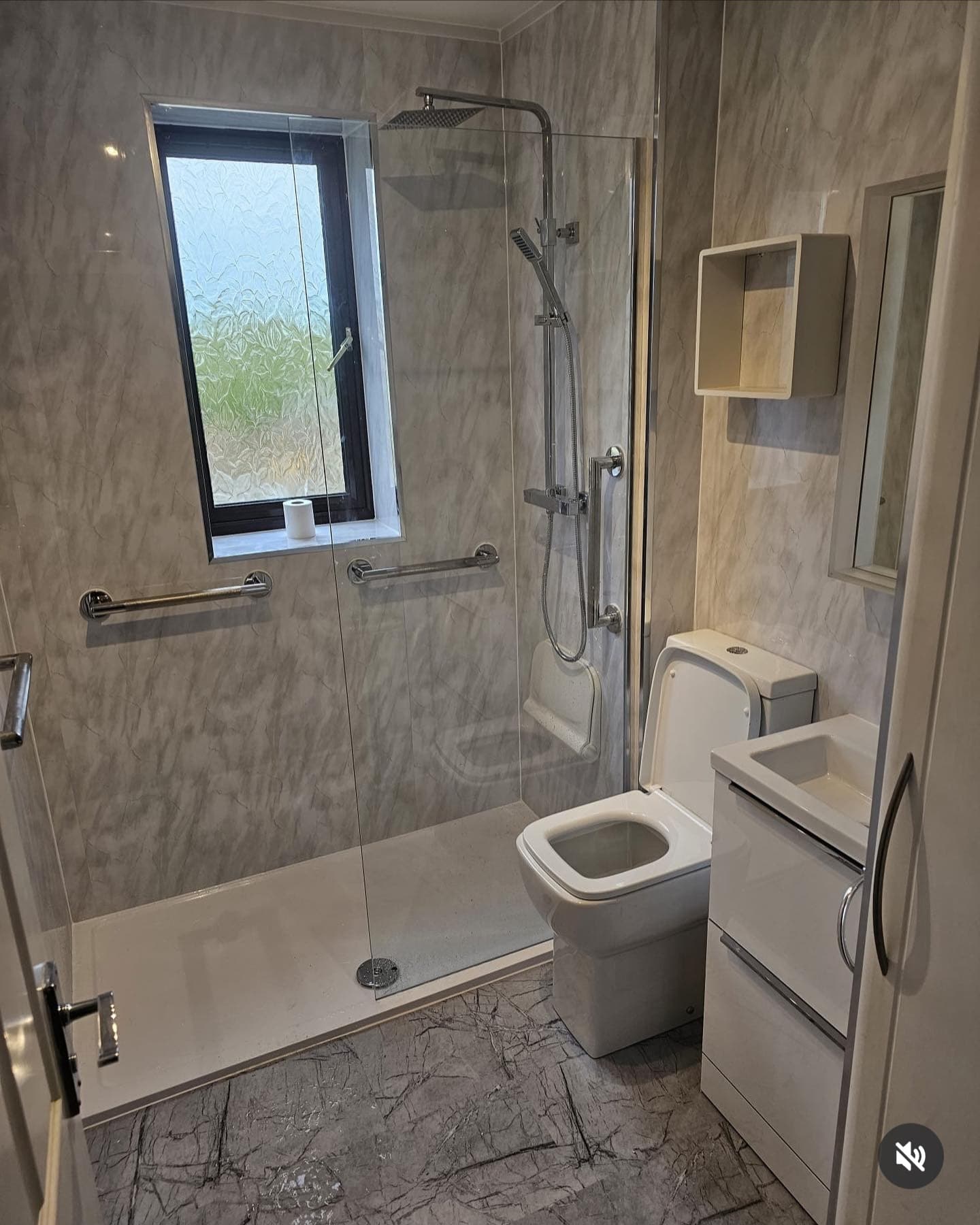
Wet-room tanking: what actually keeps the water in
People ask for a wet room because they want step-free and easy to clean. The photograph is the tiles. The product is the waterproofing and the fall to the waste. Get those wrong and the ceiling below becomes the first person to notice.
The layers, in order
- —A structure that can take the weight and the waste
- —A former or a screed that falls to the outlet
- —A tanking system carried up the walls past the splash
- —Tiles or a finish on top of that, not instead of it
- —A drain that can be cleaned
Panels are a different route to the same promise
A panelled shower is still a waterproof room. The boards and the joints do the job that tanking and grout do on a tiled wet room. Neither is “just a covering”. If a quote cannot explain which system is being used, it is not a wet-room quote.
Ready to see what fits your home?
Book a free surveyFAQ
Quick answers
Is tile adhesive waterproofing?+
No. Adhesive sticks tiles. A tanking membrane or a dedicated wet-room former keeps water out of the building. They are different layers.
Do bathroom panels need tanking as well?+
The panel system is the waterproof layer when it is installed as the manufacturer intends, with the right trims and joints. The floor and the junctions still need detailing. We do not treat silicone as the system.
Can every bathroom become a wet room?+
No. You need a floor that can accept the fall and a waste that can take it. Some upstairs joists will not give you that without a lot of building work. The survey is where that is decided.
ProActive BathroomsTalk through your options on a free survey.